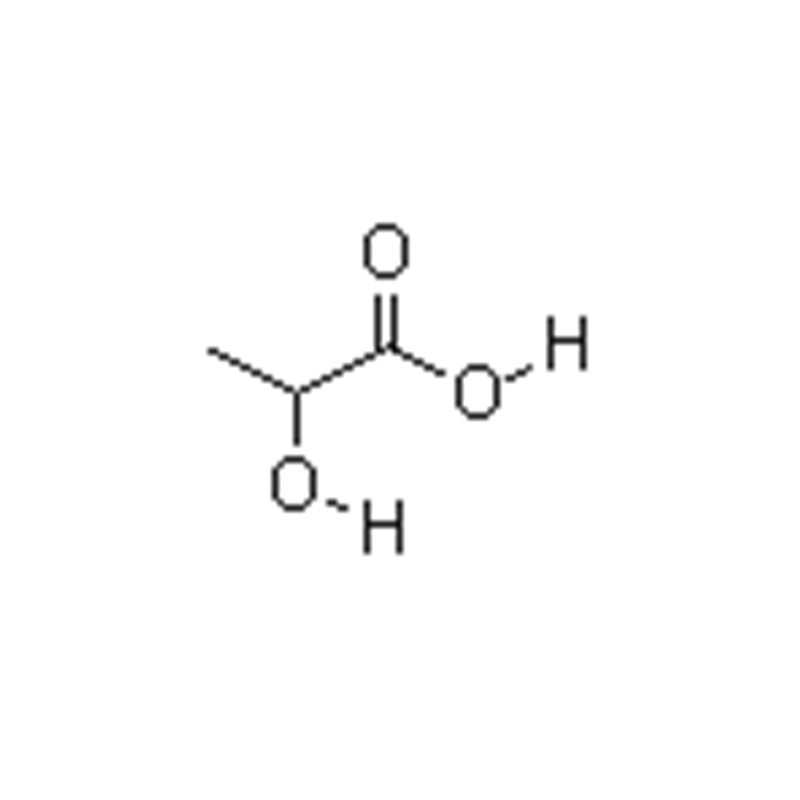
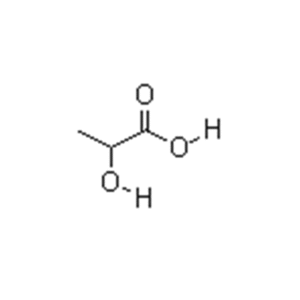
【CAS】598-82-3 Fórmula molecular: C3H6O3 Masa molecular relativa:90.0705
Fórmula estructural: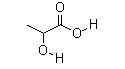
一.Propiedad del producto:
Acidez suave: El ácido láctico tiene un sabor ácido suave y es adecuado para condimentar.
Efecto antimicrobiano: puede inhibir eficazmente el crecimiento de microorganismos patógenos y prolongar la vida útil de los alimentos.
Solubilidad en agua: El ácido láctico es fácilmente soluble en agua y se puede mezclar con agua, etanol, etc. libremente, lo que lo hace conveniente para su uso.
二.Índice de calidad:
| Parámetro | Unidad | Especificación (calidad alimentaria) |
| Apariencia | - | Líquido incoloro o amarillento |
| Ensayo (C₃H₆O₃) | % (p/p) | ≥ 80,0 (solución acuosa) |
| Sulfato (SO₄²-) | % (p/p) | ≤ 0.005 |
| Cloruro (Cl-) | % (p/p) | ≤ 0.002 |
| Hierro (Fe) | mg/kg | ≤ 10 |
| Metales pesados (como Pb) | mg/kg | ≤ 5 |
| Arsénico (As) | mg/kg | ≤ 1 |
| Azúcares | - | Pasa la prueba (sin reducción) |
| Ácidos volátiles (como ácido acético) | % (p/p) | ≤ 0.2 |
| Residuos en el encendido | % (p/p) | ≤ 0.1 |
| Cianuro (CN-) | mg/kg | ≤ 5 |
| Oxalato (C₂O₄²-) | mg/kg | ≤ 100 |
| Límites microbiológicos | - | Ausencia de agentes patógenos |
三.Ámbito de aplicación y uso:
Industria alimentaria: El ácido láctico se utiliza ampliamente en alimentos como la carne, las bebidas, la elaboración de vino, los dulces y el pan, ya que puede regular los niveles de pH, realzar el sabor y prolongar la vida útil.
Productos lácteos: Como ingrediente natural, el ácido láctico se utiliza ampliamente en yogures, quesos y helados, potenciando el sabor y las propiedades antimicrobianas.
Productos cárnicos: En el procesado de la carne se utilizan derivados como el lactato sódico y el lactato potásico, que pueden absorber la humedad e inhibir el crecimiento de bacterias de deterioro. Bebidas: En zumos de fruta y refrescos, el ácido láctico sirve como acidulante, realzando el sabor y manteniendo la estabilidad del producto.
四.Embalaje y almacenamiento:
El ácido láctico suele envasarse en bidones de polietileno de alta densidad (HDPE) de 25 kg/barril, contenedores de acero inoxidable o contenedores IBC de plástico alimentario para evitar la corrosión y la contaminación. El envase debe estar herméticamente cerrado para evitar la absorción de humedad y la oxidación.
Para su almacenamiento, el ácido láctico debe conservarse en un lugar fresco, seco y bien ventilado, alejado de la luz solar directa, fuentes de calor y materiales incompatibles (por ejemplo, oxidantes fuertes).